Search Results
Search Results
703 results found with an empty search
- No Entry
< Back No Entry Gila Green December 8, 2020 No Entry (Stormbird Press, 2020) is Gila Green’s first young adult Eco-Fiction novel. It is the first in an environmental series focused on elephant poaching and the international trade that leads to their illegal slaughter. Seventeen-year-old Yael Amar is in South Africa, signed up for a summer course in South Africa’s Kruger National Park. A rising senior, she plans to join her parents in Johannesburg, where her father will spend his sabbatical year from a Canadian University. Yael’s parents originally emigrated to Canada from South Africa years before and have returned while mourning the tragic death of Yael’s brother. Yael, also in mourning, but busy learning everything from medic training to driving on the left side of the road, uncovers a deadly elephant poaching ring. After witnessing some horrible violence, she just isn’t sure what to do about it. In addition to No Entry , Canadian author Gila Green is the author of three novels: King of the Class (Non-Publishing 2013), Passport Control (S&H Publishing, 2018), and White Zion (Cervena Barva Press, 2019). Her short fiction appears in dozens of literary magazines in the U.S.A., Canada, Australia, Israel, Ireland, and Hong Kong including: The Fiddlehead , Terrain.org , Akashic Books, Sephardic Horizons , Jewish Literary Journal , Fiction Magazine, The Saranac Review, Arc Magazine, Many Mountains Moving, Noir Nation, Quality Women's Fiction, The Dalhousie Review, The Bookends Review, and Boston Literary Review . Green’s work has been short-listed for the Doris Bakwin Literary Award (Carolina Wren Press), WordSmitten's TenTen Fiction Contest, the Walrus Literary Award, and the Eric Hoffer Best New Writing Award. She also wrote the introduction to Doikayt, an anthology of short tabletop roleplaying (November 2020). When She’s not teaching or writing, Green is busy raising five children, cooking, and baking her own bread. She loves music, daily walks through the Judean Hills by her home, hiking, pilates, and really good coffee. Listen to Episode Buy Book Previous Next
- Gravity Hill
< Back Gravity Hill Susanne Davis September 28, 2022 Gravity Hill (Madville Publishing 2022) is the story of a small town in Connecticut grappling with the tragic death of three teenage boys. What first appears to be a drunk driving tragedy leads back to a mysterious accident (based on the real Revere Textile Mill Superfund site in Sterling) that has plagued the town for years. The sister of one of the boys nearly spins out of control before embarking on a journey to clear her brother’s name. She questions the presence of someone from the Environmental Protection Agency, finds a hidden toxic waste site, and begins the process of healing everyone who was affected. Susanne Davis is the daughter of a sixth-generation dairy farmer and grew up in Sterling, where her brother still operates the family dairy farm just a couple of miles from Gravity Hill. She has an MFA from the Iowa Writers' Workshop and a short story collection, The Appointed Hour. Individual stories have been published in American Short Fiction, Notre Dame Review, Clackamas Literary Review, and other literary journals. Her work has won awards and recognition, including 2nd place in Madville's Blue Moon Literary Competition. Davis also teaches writing at the college level. When she's not writing or reading, she loves spending time with her family, sailing, photographing the very photogenic family cats, Zoey and Bear, and baking chocolate chip cookies for anyone who will eat them! Listen to Episode Buy Book Previous Next
- All Sorrows Can Be Borne
< Back All Sorrows Can Be Borne Loren Stephens May 11, 2021 In All Sorrows Can Be Borne (Rare Bird Books, 2021), Loren Stephens tells the story, inspired by true events, of a Japanese woman who survives the bombing of Hiroshima, joins her half-sister in Osaka and gives up her dream of becoming a theater star. Later, she marries the man of her dreams and gives birth to a beautiful son. After her husband is diagnosed with tuberculosis, he convinces Noriko to send the toddler to his sister and her Japanese American husband, who live in Montana. Eighteen years later, Noriko’s son enlists in the U.S. Navy and gets sent to Japan. This is a novel about Japanese society and postwar cultural norms, the human cost of war, and a mother’s love. Loren Stephens is a widely published essayist and fiction and nonfiction storyteller. Her work has appeared in the Los Angeles Times , the Chicago Tribune , MacGuffin , The Jewish Women’s Literary Annual , Forge , Crack the Spine , Amuse Bouche , The Writer’s Launch , the Summerset Review , the Montreal Literary Review , and Tablet Travel Magazine to name a few. She is a two-time nominee of the Pushcart Prize and the book Paris Nights: My Year at the Moulin Rouge , by Cliff Simon with Loren Stephens was named one of the best titles from an independent press by Kirkus . She is president and founder of the ghostwriting companies, Write Wisdom and Bright Star Memoirs. Prior to establishing her company Loren was a documentary filmmaker. Among her credits are Legacy of the Hollywood Blacklist , produced for PBS and nominated for an Emmy Award; Sojourner Truth: Ain't I a Woman? produced for Coronet Films and recipient of a Golden Apple from the National Education Association; and Los Pastores: The Shepherd’s Play produced for the Latino Consortium of PBS and recipient of a Cine Gold Eagle and nominated for an Imagen Award. Listen to Episode Buy Book Previous Next
- So Are You to My Thoughts
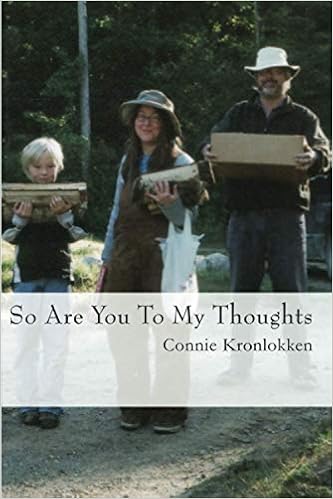
< Back So Are You to My Thoughts Connie Kronlokken July 6, 2020 So Are You to My Thoughts (Lightly Held Books, 2020 is the seventh novel in a series about the Mikkelson siblings and loosely based loosely on the author’s family. Kronlokken’s earlier novels in the series began with stories from the 1950’s and this latest installment brings us into the new century. As the book opens, sometime in the nineties, widowed Marty (Margaret) is happily living with a wonderful divorced winemaker and his four children in the hills above Santa Cruz. Line (Caroline) and her husband have returned home to Santa Cruz after several years abroad. And Paul, still in Minnesota, is grappling with his wife’s cancer. As the decade unfolds, children grow up and move on, problems are confronted, spirituality is explored, and the loving bonds of this large family continue to pull them all together. Connie Kronlokken grew up in a large Norwegian/Dutch family and spent her childhood in small towns across Minnesota, North Dakota, and Iowa. She went to a Lutheran College and completed her master’s in library science at the University of Michigan. In 1969 she and her husband moved to San Francisco, where she worked as an office manager in large architectural firms and a database manager at a wine brokerage. She studied filmmaking in Denmark, and writes two blogs. Kronlokhen published two novels and a book of essays before embarking on the So Are You to My Thoughts series. Now living in Los Angeles, she enjoys cooking and gardening, and has studied yang style tai chi for over thirty years. Listen to Episode Buy Book Previous Next
- The Village Idiot
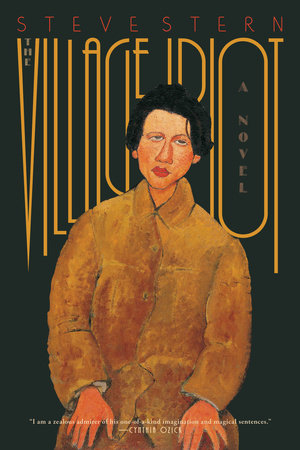
< Back The Village Idiot Steve Stern September 13, 2022 The Village Idiot by Steve Stern (Melville House, 2022) opens with a marvelous boat race on the River Seine in 1917. The already well-known artist Amedeo Modigliani is in a bathtub ostensibly being pulled by a flock of ducks, but actually being hauled by immigrant painter Chaim Soutine. Soutine, a poorly educated, rough, and unmannered immigrant from a shtetl in the Pale of Settlement, is disoriented by the recycled air he breathes into his helmet. As he trudges along the river bottom pulling the bathtub along, he considers his past and future life. Soutine painted as a child even when it led to humiliation and beatings by his father and brothers. Neither the collectors who supported him, the friends (like Modigliani) who stood up for him, or the women who fought over him could get in the way of his painting. But then the Nazis swept across Europe, destroying everything Jewish in their path, including a generation of talented Jewish artists. Some, like Soutine, managed to evade capture. Stern’s gorgeous novel is a sweeping, imaginative story of a great artist who was uniquely brilliant but simultaneously unpleasant and unwashed. Steve Stern was born in Memphis, Tennessee in 1947, and left to attend college, then to travel before ending up on a hippie commune in the Ozarks. He studied writing in the graduate program at the University of Arkansas, at a time when it included several notable writers who've since become prominent, including poet C.D. Wright and fiction writers Ellen Gilchrist, Lewis Nordan, Lee K. Abbott and Jack Butler. In his thirties, Stern accepted a job at a local folklore center where he learned about the city's old Jewish ghetto, The Pinch, and began to steep himself in Yiddish folklore. His first book, Isaac and the Undertaker's Daughter, 1983 won the Pushcart Writers' Choice Award. By decade's end Stern had won the O. Henry Award, two Pushcart Prize awards, published more collections, including Lazar Malkin Enters Heaven (which won the Edward Lewis Wallant Award for Jewish American Fiction) and the novel Harry Kaplan's Adventures Underground, and was being hailed by critics, such as Cynthia Ozick, as the successor to Isaac Bashevis Singer. Stern's 2000 collection The Wedding Jester won the National Jewish Book Award and his novel The Angel of Forgetfulness was named one of the best books of 2005 by The Washington Pos t . Stern, who teaches at Skidmore College, has also won some notable scholarly awards, including a Fulbright fellowship and the Guggenheim foundations Fellowship. He splits his time between Brooklyn and Balston Spa, New York and enjoys hiking, climbing, biking, and kayaking. Listen to Episode Buy Book Previous Next
- Shadows We Carry
< Back Shadows We Carry Meryl Ain July 4, 2023 Meryl Ain's Shadows We Carry (Sparkspress, 2023) is a follow-up to the author’s 2020 novel, The Takeaway Men , focuses on fraternal twins Bronka and JoJo Lubinski, now in college and figuring out what to do with their lives. Beginning with the assassination of President Kennedy, we watch the sisters navigate social upheaval, family expectations, and all the usual aspects of growing up, but they were born in a DP camp after WW2 and are children of Holocaust Survivors, now referred to as “Second - Generation Survivors.” They’ve inherited their parents’ guilt (their mother lives a Jewish life but never converted) and emotional trauma (their father’s first family was killed by Nazis) but they live in 1960s and 70s New York and also have to navigate relationships, career dreams, and social expectations for women of that generation. Then Branka, who dreams of becoming a serious journalist but has been relegated to the food column, is asked to cover a neo-Nazi protest, and her eyes are opened to the presence of Hitler acolytes in this country. Meryl Ain is a writer, author, podcaster, and career educator. She received a BA in Political Science from Queens College, holds an MA in Teacher History from Columbia University, and earned a doctorate in Educational Administration from Hofstra University. She has worked as a journalist and her articles and essays were published in many publications, but most of her career was spent working as a high school history teacher and administrator. Her award-winning post-Holocaust debut novel, The Takeaway Men , was published in 2020. She is the host of the podcast, People of the Book , and the founder of the Facebook group, Jews Love To Read! which has more than 4,000 members. Her novels are a result of her life-long quest to learn more about the Holocaust, a thirst that was first triggered by reading The Diary of Anne Frank in the sixth grade. When she's not reading or writing, she enjoys meeting with groups to discuss her books. She's a lifetime member of Hadassah, a member of The International Advisory Board for Holocaust Survivor Day, a supporter of UJA-Federation, as well as Holocaust centers and causes. Meryl lives in New York with her husband, Stewart. Her greatest joy is spending time with their six grandchildren. Listen to Episode Buy Book Previous Next
- The Wandering Womb: Essays in Search of Home
< Back The Wandering Womb: Essays in Search of Home S.L. Wisenberg April 4, 2023 As a child, S. L. Wisenberg worried about being outside, not being able to breathe, and Nazis coming through the window of her Houston home. In this remarkable collection of essays, she recalls chasing popularity, taking a Neiman Marcus sponsored class about fashion at age eleven. She tells funny but poignant stories about her travels in Paris, Vienna, and Poland, including a numbing visit to Auschwitz. In one essay Wisenberg searches through family records and history books and conducts interviews to learn more about Selma, Alabama, where her great grandparents ended up after leaving Lithuania. In another she describes going through sorority rush when she’s twenty-nine and teaching at the university. This is a moving, sometimes hilarious exploration of love, life, history. As the reviewer in the Southern Review of Books wrote,” This luxe tapestry of stories and ideas creates a vivid image of Wisenberg as a woman, as Jewish, and as a thinker in the world…. This book is at once intellectual, deeply personal, and delightful.” S.L. Wisenberg is the author of a fiction collection, The Sweetheart Is In ; the essay collection Holocaust Girls: History, Memory & Other Obsessions ; and a chronicle, The Adventures of Cancer Bitch . She has received a Pushcart Prize, and awards and fellowships from the National Endowment for the Humanities, Illinois Arts Council, and the Fine Arts Work Center in Provincetown. The former co-director of the MA/MFA program at Northwestern University, she has taught workshops and read and lectured widely. Wisenberg lives in Chicago, where she edits Another Chicago Magazine . When she's not writing, she's walking through her Chicago neighborhood, fixing a stir-fry, or collecting grocery lists that people leave behind. Listen to Episode Buy Book Previous Next
- Song of the Sisters
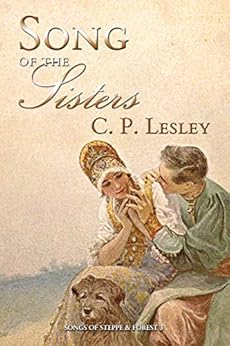
< Back Song of the Sisters C. P. Lesley January 19, 2021 Everywhere young Russian noblewoman Darya Sheremeteva turns, someone in her circle of family and friends reminds her that she exists to serve a single purpose: to marry a powerful man selected by her male relatives and bear children, preferably sons, to continue his line. But after years in isolation nursing her elderly father, Darya questions whether marriage and motherhood constitute the best, never mind the only, future for a woman of twenty-five. Should she not instead take monastic vows and surrender her will to the soaring ritual of the Orthodox Church? When a cousin lays claim to her father's estate, Darya's decision acquires a new urgency. Because this cousin will stop at nothing to advance his career, and his most valuable asset is Darya herself. Years ago, C. P. Lesley decided to focus on sixteenth-century Russia. After all, they say, “write what you know,” and as a historian with a Stanford doctorate, that’s what she knew. It was also a time and place filled with exciting and dramatic events, some of which defy belief. The result was a mystery story set in 1530s Moscow about a young couple resolving a series of crimes by combining clues they pick up in the gender-segregated worlds of husbands and wives. Although she didn’t complete that novel, the original idea gave rise to The Golden Lynx , which became the basis of a series called Legends of the Five Directions and led to her becoming the host of New Books in Historical Fiction here on the New Books Network. After almost a decade spent creating an entire world of characters, she couldn’t bear to let them go, and the result is Songs of Steppe & Forest , a less tightly linked set of books that exist in the same story space five to ten years later and feature characters who, for one reason or another, took a back seat in the Legends novels. Songs of Steppe and Forest will answer the question, “What made Ivan the Terrible so terrible?”. When not thinking up new ways to torture her characters, C.P. Lesley edits other people's manuscripts, reads voraciously, maintains her website, and practices classical ballet. That love of ballet also finds expression in her Tarkei Chronicles series, "Desert Flower" and "Kingdom of the Shades." Listen to Episode Buy Book Previous Next
- This Place That Place
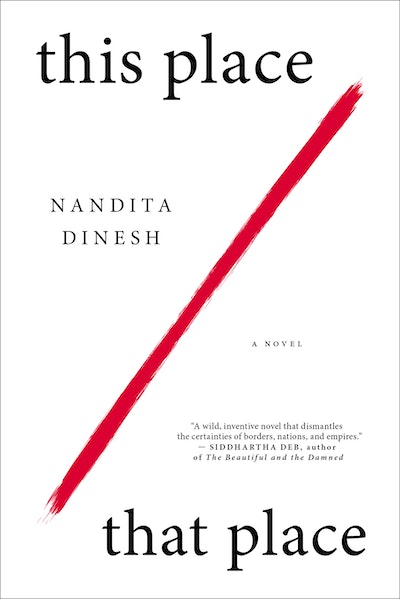
< Back This Place That Place Nandita Dinesh July 19, 2022 A nameless young woman from This Place, and a nameless young man from That Place are stuck together when That Place, the occupying force, imposes another curfew on This Place. Author Nandita Dinesh never identifies the country, but the two protagonists share a language and much of their culture. They’re also falling in love. The young woman from That Place is a De-programmer, whose job involves interviewing the military troops now patrolling outside the house where she’s holed up with the young man. He is a Protest Designer, skilled at waiting out curfews, although his brother is supposed to be getting married the next day and there’s a lot of conversations about that. While confined with the young woman, the young man explains his strategies for passing time while under curfew. He wonders how his family and neighbors will react if he marries her. Where would they live? They swap stories about their families and respective homelands, and want to imagine strategies for ending the conflict, but nothing seems doable. This is an allegory for military occupations, like what we’re currently seeing in Ukraine, but it’s happened all over the world. This Place That Place (Melville House, 2022) is also a glimpse at what it might be like for hapless citizens to be imprisoned in their own homes. Nandita holds a PhD in Drama from the University of Cape Town in South Africa, and an MA in Performance Studies from the Tisch School of the Arts at New York University. An amateur cook who loves experimenting with Indian cuisines, Nandita has conducted community-based theatre projects across a range of contexts and in 2017, she was awarded the Elliott Hayes Award for Outstanding Achievement in Dramaturgy by Literary Managers and Dramaturgs of the Americas. She was born and raised in Coimbatore, India and now lives in San Francisco with her husband and a 90-pound Doberman Mix named Mila. Nandita is currently working on projects across literary genres — a book that lies somewhere between a novel, a memoir, and a play being the next in line! Listen to Episode Buy Book Previous Next
- Homicide and Halo-Halo
< Back Homicide and Halo-Halo Mia P. Manansala February 22, 2022 Homicide and Halo-Halo (Berkley, 2022) is the second cozy mystery in the Tita Rosie’s Kitchen mystery series. Written in first person, baker Lila Macapagal is about to open the Brew-Ha Café in Shady Palms, a fictional town about 2 hours outside of Chicago. Lila, a proud Filipino American who bakes awesome fusions of Filipino and American pastry, is a 25-year-old who has been asked to guest judge a local beauty pageant that she won as a teenager. The first sign of trouble is a threat about the competition, and then one of Lila’s fellow judges is found dead. Cozy mysteries are usually lightweight and amusing – while Homicide and Halo-Halo is written in a light-hearted style, characters grapple with serious issues such as PTSD, fatphobia, fertility and pregnancy issues, predatory behavior, unresolved grief, parental death, and dismissive attitudes toward mental health. Mia P. Manansala is a writer and certified book coach who earned her undergraduate degree in English at Northeastern Illinois University. A 2017 alum and 2018-20 mentor for Pitch Wars, a volunteer-run writing program, Manansala uses humor (and murder) to explore aspects of the Filipino diaspora, queerness, and her millennial love for pop culture. She is the winner of the 2018 Hugh Holton Award, the 2018 Eleanor Taylor Bland Crime Fiction Writers of Color Award, the 2017 William F. Deeck - Malice Domestic Grant for Unpublished Writers, and the 2016 Mystery Writers of America/Helen McCloy Scholarship. A lover of all things geeky, Mia spends her days procrastibaking , playing JRPGs and dating sims, reading cozy mysteries, and cuddling her dogs Gumiho, Max Power, and Bayley Banks (bonus points if you get all the references). Listen to Episode Buy Book Previous Next
- Muffin and Bread Recipes to Die For by G. P. Gottlieb
Muffin & Bread Recipes to Die For Muffins and Breads, Gluten Free, Baking, Breakfast Gluten-Free Pancakes We were desperate for pancakes so I tweaked another recipe I was working on to make these. Read Recipe Muffins and Breads, Gluten Free, Vegetarian, Baking, Vegan Gluten-Free/Nut Free/Vegan Banana Bread The recipes uses 2 bananas and a whole small seed apple. Read Recipe Vegetarian, Baking, Breakfast, Muffins and Breads, Cakes & Pies & Icing Chocolate Zucchini-Pear Cake GF Healthy enough for breakfast! Read Recipe Muffins and Breads, Baking, Vegan, Gluten Free, Cakes & Pies & Icing Best Chocolate Cake/Muffins GF. V. Didn’t I tell you I was going to be at my Aunt Ivy’s for a barbeque dinner at which I ate purely protein ... Read Recipe Muffins and Breads, Baking Challah Traditional recipes never tasted so good! Read Recipe Muffins and Breads, Vegan, Breakfast Vegan Sweet Potato or Pumpkin Muffins "There are only six sweet potato muffins left," said Alene. Read Recipe Muffins and Breads, Baking, Vegetarian, Breakfast, Cakes & Pies & Icing Chocolate Zucchini – Apple Cake Yes, we eat this for breakfast! Read Recipe Muffins and Breads, Gluten Free Fudgy Chocolate Butternut Squash Muffins No dairy, low-sugar, healthful, delicious! Read Recipe All Recipes Baking Breakfast Cakes, Pies, & Icing Cookies & Brownies Dips & Sauces Entrees Gluten-Free Muffins & Breads Soup Vegan Vegetarian Load More
- Dry Land
< Back Dry Land B. Platek October 3, 2023 Rand Brandt, a forester in the Northwoods of Wisconsin, discovers that his touch can grow any plant or tree. In this tale of Magical Realism, he dreams of using his gift to restore landscapes ruined by the lumber industry, but first needs to test his powers. Gabriel, his fellow forester, and secret lover, finds and saves Rand after he’s pushed himself by spending his nights sneaking into the forest instead of sleeping. It’s 1917 and the foresters are drafted to join in the fight in France. An old friend of Rand’s joins the press covering his unit and helps him cover his tracks. A commanding officer learns about Rand’s gift and demands that he grow forests for the wood needed to win the war, but Rand learns that everything he grows will die within days. Now, he’s keeping two major secrets, either of which, if discovered, could destroy him. Ben Pladek is associate professor of literature at Marquette University in Milwaukee, Wisconsin. His first novel, Dry Land , appeared in September 2023 with the University of Wisconsin Press. He’s previously published short fiction in Strange Horizons, The Offing, Slate Future Tense Fiction, and elsewhere. As a colleague pointed out to him, his short fiction is often set in the near-future and his longer fiction in the near-past; other recurring interests include ecology, messy relationships, messier bureaucracy, and people feeling guilty. He’s also written an academic book called The Poetics of Palliation: Romantic Literary Therapy, 1790-1850, that came out from Liverpool University Press in 2019, as well as a number of articles on British Romanticism. Before getting hired at Marquette, he did his PhD at the University of Toronto and taught for a year in the fantastic Foundation Year Programme at the University of King’s College in Halifax, Nova Scotia. When he moved to Wisconsin, he fell in love with the landscape and the state’s fascinating history of conservation, including the writings of Aldo Leopold. Ben and his husband have hiked all over Wisconsin. They especially enjoy the Northwoods, Horicon Marsh, and the southwest “driftless” area. In Ben’s spare time you can find him reading, birdwatching, taking long walks around Milwaukee, admiring wetlands, eating peanut butter, and taking pictures of informational signs at historical monuments that he’ll never go back and read. Listen to Episode Buy Book Previous Next