G.P. Gottlieb: Murder, Mystery, and Recipes: Just a Little Cozy


Search Results
Search Results
Search this site
726 results found with an empty search
- Zucchini Dip/Sauce - A Recipe to Die For by G. P. Gottlieb
It's so delicious! You can use fresh dill or fresh mint for this perfect dip! < Back Zucchini Dip/Sauce September 17, 2019 Prep Time: 15 Minutes Cook Time: 10 Minutes Serves: 30 Servings Tags: Dips and Sauces, Vegan, Vegetarian About the Recipe p.227 Battered: A Whipped and Sipped Mystery The community room was the size of two full apartments, so it was a great place to take children when it was too cold or hot to play outside. Noah was already on his fourth trip around the room. She let him watch one more crack of lightening and make one more run around the room before announcing that it was time to go back home to prepare dinner. An hour later, the smell of tomato pesto soup and fresh bread filled the apartment as Quinn set the table, Noah poured the water, and Sierra placed the butter plate and a bowl of zucchini-dill dip on the table. They all sat down, and Alene was happy to get through dinner without a single argument. The kids finished quickly as usual, and Alene stayed at the table to keep her father company. It took him a long time to eat his meal. “Dad,” said Alene, “do you remember hearing anything about Gary hiding money that Joan embezzled from her company? Ingredients 1 small or medium zucchini, cut into pieces w/skin 2 or 3 cloves garlic Olive oil spray for the pan Juice of ½ small lemon (about 2 TBSPs) ¼ cup water (if you want to use this as salad dressing, use EVOO instead) 1/3 cup golden raisins (you can use honey, agave, or brown sugar – don’t use dark raisins) 2 TBSP tahini (or use 1 TBSP sesame seeds + ¼ cup water) ¼ tsp each: salt, pepper ½ tsp each: cumin, coriander, turmeric 1 tsp dried basil 1/2 oz (about a handful) of fresh mint Preparation Sauté zucchini and garlic in hot, sprayed pan until lightly browned (5-7 minutes). Add everything to blender and process until smooth. Season to taste (add more salt or if you like it sweeter, add 1 tsp of honey or agave. Makes about 1 ½ cups (serve with everything!) Previous Next
- Catherine Louisa Pirkis
Catherine Louisa Pirkis: Disappeared From Her Home < Back Catherine Louisa Pirkis Author of Disappeared From Her Home November 10, 2020 Catherine Louisa Pirkis (1839-1910) wrote a total of 14 novels in the years spanning between 1877 and 1894, and contributed to many journals. Her first novel, Disappeared from her Home, was the first mystery written by a female author and starting a female heroine. It was serialized in The Ludgate Monthly in 1893-93 and followed the ‘casebook’ format popularized by authors like Sherlock Holmes. In May of 1893, her stories about Loveaday Brooke began to be featured in The May Mgazines edition of the Glasgow Herald. The commentary included comments about how Miss Brooke might not be as good at catching a husband as she is at catching criminals. After The Adventures of Loveday Brooke was published, Catherine Louisa Pirkis began to focus her attention on animal rights and ceased to publish. Previous Next
- Attica Locke
Attica Locke: Black Water Rising < Back Attica Locke Author of Black Water Rising March 14, 2022 Attica Locke’s (b 1974) first novel, B lack Water Rising was nominated for an Edgar Award, an NAACP Image Award, as well as a L os Angeles Times Book Prize, and was short-listed for the Women’s Prize for Fiction. She came out with H eaven, My Home (September 2019) as the sequel to her Edgar Award-winning B luebird, Bluebird. Her third novel, P leasantville was the winner of the Harper Lee Prize for Legal Fiction and was also long-listed for the Bailey’s Prize for Women’s Fiction. T he Cutting Season was the winner of the Ernest Gaines Award for Literary Excellence. I love the steamy atmosphere, the Texas Rangers, and the southern experience. Locke covers moral issues, greedy developers, white supremacy. Solid writing with no artifice. A former fellow at the Sundance Institute’s Feature Filmmaker’s Lab , Locke works as a screenwriter as well. Most recently, she was a writer and producer on Netflix’s W hen They See Us a nd the also the upcoming Hulu adaptation of L ittle Fires Everywhere. A native of Houston, Texas, Attica lives in Los Angeles, California, with her husband and daughter. Previous Next
- Beautiful Dreamers
Memory Feather, who was born with a misshapen hand and was able to communicate with animals, looks back to when she was a child living with her newly divorced mother in a dilapidated hotel far from home. < Back Beautiful Dreamers Minrose Gwin April 1, 2025 Memory Feather, who was born with a misshapen hand and was able to communicate with animals, looks back to when she was a child living with her newly divorced mother in a dilapidated hotel far from home. Her mother, Virginia cleans rooms and turns occasional tricks to support Memory until 1953, when she’s forced to return to the Mississippi Gulf Coast town where her difficult, bigoted parents live. Much to their disdain, Virginia’s childhood friend Mac welcomes Mem and her mother to live with him and offers Virginia a job in his antique store. As a gay man in the 1950s, Mac suffers harassment and violence, and even Memory’s cat Minerva knows that the good-looking hustler who’s moved in with Mac is evil. Mem recalls her anxiety, her fears, and her role in the series of events that changed her life forever. Minrose Gwin is the author of The Queen of Palmyra, a Barnes & Noble Discover Great New Writers pick and finalist for the John Gardner Fiction Book Award; Promise, shortlisted for the Willie Morris Award in Southern Literature; and The Accidentals, which received the 2020 Mississippi Institute for Arts and Letters Award in Fiction. She has also published a memoir, Wishing for Snow , about the collision of poetry and psychosis in her mother’s life, and four books of literary and cultural criticism, most recently Remembering Medgar Evers: Writing the Long Civil Rights Movement. She was coeditor of The Literature of the American South , a Norton anthology, and The Southern Literary Journal . She received the Society for the Study of Southern Literature Richard Beale Davis Award for Distinguished Lifetime Service to Southern Letters and the Wisdom/Faulkner Books-in-Process Award for Rescue , the novel she’s working on now. Like the characters in her novel Promise, Minrose Gwin is a native of Tupelo, Mississippi. She began her writing career as a journalist and later taught at universities across the country, most recently the University of North Carolina at Chapel Hill, where she was Kenan Eminent Professor of English. She lives in Albuquerque, NM, with her partner, Ruth Salvaggio, cats Ella Fitzgerald and Frida Kahlo and a busy-body Chihuahua named Henry. In her spare time, she volunteers at the city animal shelter taking care of new-born kittens who have lost their mothers. minrosegwin.com Listen to Episode Buy Book Previous Next
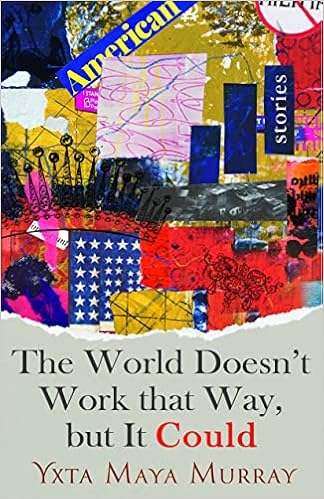
- The World Doesn't Work that Way, But it Could
These compelling stories are based on recent headlines from before the pandemic crisis, when environmental regulations were overturned at breakneck speed and society had already started to become numb in the face of moral depravity and a lack of objective truth. < Back The World Doesn't Work that Way, But it Could Yxta Maya Murray August 18, 2020 A trainer of beauty pageant contestants is disappointed after spending a fortune to prepare a beautiful Latina for the Miss USA pageant, only to learn that she harbors a disqualifying secret. A nurse volunteers to help after Puerto Rico has been devastated by hurricane Maria, only to face a lackadaisical government response. An EPA employee whose parents died from exposure to a pesticide that was later banned, is forced to justify reversing the regulations that would have saved her parents. And a future department of education employee discovers the ultimate cost of federal overreach in primary education. These compelling stories are based on recent headlines from before the pandemic crisis, when environmental regulations were overturned at breakneck speed and society had already started to become numb in the face of moral depravity and a lack of objective truth. The thought-provoking tales in Yxta Maya Murray ’s short story collection The World Doesn't Work that Way, But it Could: Stories (University of Nevada Press, 2020) are inspired by recent headlines and court cases in America. Regular people negotiate tentative paths through wildfires, mass shootings, bureaucratic incompetence, and heedless government policies. Characters grapple with the consequences of frightening attitudes pervasive in the United States today, or they struggle to make a living, raise their children, and do a little good in the world. In these brilliantly written stories, Murray explores the human capacity for moral numbness and its opposite, the human desire to be kind and compassionate. Listen to Episode Buy Book Previous Next
- Bone Broth
It’s 2015, and the suburbs of St. Louis, Missouri are still simmering after the fatal police shooting sparked a national debate about use-of-force law, militarization of police, and the relationship between the police and African Americans. < Back Bone Broth Lyndsey Ellis February 1, 2022 Lyndsey Ellis’s debut novel, Bone Broth (Hidden Timber Books 2021) tells the story of Justine Holmes, who is mourning her husband’s death and grappling with both societal and family tensions. It’s 2015, and the suburbs of St. Louis, Missouri are still simmering after the fatal police shooting sparked a national debate about use-of-force law, militarization of police, and the relationship between the police and African Americans. Justine’s adult children, an unemployed former activist who is angry at her mother, a realtor still mourning the loss of her only child, and a defeated politician who struggles with his sexual identity, are all mourning their own losses. Tension builds as Justine faces her activist past, her marriage to an abusive husband, and her unquenched longing for family peace, but the only thing that makes her feel alive is stealing small items from other people’s funerals. Lyndsey Ellis is a fiction writer, essayist, and novelist. Her work has appeared in Kweli Journal, Catapult, Fiction Writers Review, Electric Literature, Joyland, Entropy, Shondaland, and several anthologies. Ellis was a recipient of the San Francisco Foundation’s Joseph Henry Jackson Literary Award and the Barbara Deming Memorial Fund for her fiction. She’s currently a prose editor for great weather for MEDIA and The Account: A Journal of Poetry, Prose & Thought. She lives in St. Louis, Missouri, where she enjoys thrift stores, bike riding and horror films when she’s not reading or writing. Listen to Episode Buy Book Previous Next
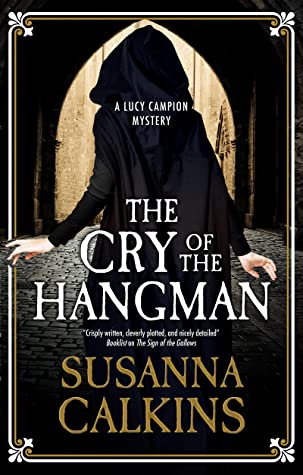
- The Cry of the Hangman
It’s December 1667 and London is still recovering both from the Plague and the Great Fire. Lucy Campion visits retired judge Master Hargrave and discovers that he’s been attacked and robbed in his home. < Back The Cry of the Hangman Susanna Calkins November 16, 2021 It’s December 1667 and London is still recovering both from the Plague and the Great Fire. Lucy Campion visits retired judge Master Hargrave and discovers that he’s been attacked and robbed in his home. She once worked as a maid for the judge, but she learned how to read and now works as a sort of printer’s apprentice. It turns out that a stash of the judge’s papers has been stolen. Then, while Lucy is working, trying to interest buyers in the books she has helped print, a rival storyteller poaches the crowd she has convened, and it becomes clear that his tales are directly connected to the judge’s stolen papers. When she hears someone being murdered, and that too is connected to the judge’s papers, Lucy is determined to figure out who is trying to destroy his name. In The Cry of the Hangman (Severn House, 2021), the historian Susanna Calkins also manages to convey 17th century British views about order and justice, crime and punishment, legal and illegal marriages, the possibility of moving out of the social order to which one is born, and enthusiasm for the accessibility of printed materials. Susanna Calkins writes the award-winning Lucy Campion historical mysteries set in 17th century London and the Speakeasy Murders set in 1920s Chicago. Her books have been nominated for the Anthony, Agatha, Mary Higgins Clark, the Lefty awards, and her third mystery received the Macavity. Holding a doctorate in history, she is currently an educator at Northwestern University. She lives in the Chicago area with her husband and two sons. When she’s not writing or working--or maybe when she is--she enjoys interesting wines, beers and cocktails. Listen to Episode Buy Book Previous Next
- The Best of Crimes
Later, as his marriage crumbles and his wife takes their daughter with her to Maine, Walter finds himself more and more drawn to his young neighbor. This is a novel about family dynamics, growing older, struggling with loneliness, and forbidden love. < Back The Best of Crimes K. C. Maher October 4, 2019 A man turns himself into the police for kidnapping an underage girl. The police chief tell him to go home but Walter insists on being arrested and charged. Back to the beginning of the story in 1999, Walter is an eighteen-year-old math prodigy who has already earned two doctorates but is told to get some work experience before going to law school. An investment banker on Wall Street, by nineteen he’s married, and by twenty, the father of a daughter, Olivia. Then 9/11 happens, Walter loses his best friend, he becomes disillusioned with the banking world, and he focuses on fatherhood. Then he includes the little next-door neighbor in all of Olivia’s activities. Later, as his marriage crumbles and his wife takes Olivia with her to Maine, Walter finds himself more and more drawn to the neighbor. This is a novel about family dynamics, growing older, struggling with loneliness, and forbidden love. K. C. Maher always knew that she wanted to write. She learned grammar in parochial school and did a BA at St Johns College in Santa Fe, New Mexico, where she found her second passion, philosophy. Her short fiction has appeared in literary journals including Ascent, Black Warrior Review, Confrontation, Cottonwood, Gargoyle , and The View From Her e. Her work has been short-listed for the Iowa School of Letters Award and Drue Heinz Literature Prize. She lives in New York City and when not writing, she likes to run along the East River where it connects to the Hudson River, then back through the Financial District. Today we discuss her book The Best of Crimes (RedDoor Publishing, 2019). Listen to Episode Buy Book Previous Next
- A Judge’s Tale: A Trailblazer Fights for her Place on the Bench
Janet Kintner survived a difficult father and several assaults, but she didn’t let any of it stop her from pursuing law school as one of three women at the University of Arizona. < Back A Judge’s Tale: A Trailblazer Fights for her Place on the Bench Janet Kintner Janet Kintner survived a difficult father and several assaults, but she didn’t let any of it stop her from pursuing law school as one of three women at the University of Arizona. And she didn’t let anything stop her from pursuing justice for her clients as a new lawyer, regardless of their ability to pay, their gender, race or religion. Despite learning that men dominated the legal system, she became a prosecutor who specialized in consumer fraud. As she continued to help everyone she could, sometimes pro bono, she was elected as the third woman to ever sit on the County Bar Association board of directors. In 1976, pregnant with her second child, she was appointed by Governor Jerry Brown to be San Diego’s 3rd female judge, and two years later she was challenged by a lying lawyer whose only goal was to unseat her. Janet Kintner overcame great odds to become one of the early rare female lawyers and judges in America. Before maternity leave came into being, she gave birth to three children and missed only the three weeks of vacation due to her each year. Her second son was born in the middle of a grueling election campaign to save her judgeship, and her third child was born a few years later. Her children grew up and later gave her four lovely grandchildren, while Janet continued to work, teach other judges, and travel the world. After retiring from the bench, Janet volunteered her legal expertise and married her second husband, a high school teacher and commercial fisherman in Canada. She wrote her memoir A Judge’s Tale: A Trailblazer Fights for her Place on the Bench (She Writes Press, 2025) and learned how to fish and run a boat off the west coast of British Columbia, where she lives part of each year with Robert. Listen to Episode Buy Book Previous Next
- Starling Days
Mina completed a doctorate in Classics but can’t find a tenure track position. She earns money by teaching adjunct classes and tutoring in Latin. Mina’s husband, Oscar, who works for his distant father importing Japanese beer, hopes that leaving New York City for a few months will help with Mina’s depression. < Back Starling Days Rowan Hisayo Buchanan April 21, 2020 Mina completed a doctorate in Classics but can’t find a tenure track position. She earns money by teaching adjunct classes and tutoring in Latin. Mina’s husband, Oscar, who works for his distant father importing Japanese beer, hopes that leaving New York City for a few months will help with Mina’s depression. While they’re in London, she plans to work on a paper studying mythological women, only a few of whom survived. Mina wonders if she is one of the ones who is going to win the battle. Today I talked to Rowan Hisayo Buchanan , author of Starling Days (The Overlook Press, 2020). She received her BA from Columbia University and her MFA from University of Wisconsin-Madison. Her first novel, Harmless Like You , was a New York Times Editors’ Choice and NPR Great Read. She is the editor of the GO HOME! Anthology, and her work has appeared in Granta, Guernica, the Guardian, and the Paris Review. When not writing or teaching, she spends her time painting, snacking on nut-butter or dried seaweed, and walking her dog. Listen to Episode Buy Book Previous Next
- A Girl Goes into the Forest
Sometimes wry, sometimes charming, occasionally a story will make you gasp, especially the one-pagers. In 78 pieces of fiction, flash fiction and micro-fiction, Alford’s writing is soothing, sparkling, opaque or mysterious, but it always packs a punch. < Back A Girl Goes into the Forest Peg Alford Pursell September 26, 2019 The stories and fables in A Girl Goes into the Forest (Dzanc Books, 2019) twist and turn with the sorrows and challenges of family, lovers, growing up, and aging. Sometimes wry, sometimes charming, occasionally a story will make you gasp, especially the one-pagers. In 78 pieces of fiction, flash fiction and micro-fiction, Alford’s writing is soothing, sparkling, opaque or mysterious, but it always packs a punch. Peg Alford Pursell , author of Show her a Flower, A Bird, A Shadow , the 2017 Indies Book of the Year for Literary Fiction, has had work published in many journals and anthologies. Her micro-fiction, flash fiction, and hybrid prose have been nominated for Best Small Micro-fictions and Pushcart Prizes. She is the founder and director of WTAW Press, a nonprofit publisher of literary books, and of Why There are Words, the national literary reading series. Also, she enjoys walking through her neighborhood with its redwoods and Little Free Libraries. One of the most fascinating dreams she's had was creating a crossword puzzle in her sleep and being able to remember the lower left section when she awoke. Listen to Episode Buy Book Previous Next
- Swimming with Ghosts
Until her unemployed husband Charlie volunteers to step in as team coach, professional organizer Gillian Cloud has also controlled the neighborhood swim club and its team. She’s a beautiful, much-admired part of the community, but Gillian is living behind a façade, refusing to accept the truth about her father’s alcoholism and philandering, suppressing any unpleasantness in order to present her well-known positivity. < Back Swimming with Ghosts Michelle Brafman August 8, 2023 Until her unemployed husband Charlie volunteers to step in as team coach, professional organizer Gillian Cloud has also controlled the neighborhood swim club and its team. She’s a beautiful, much-admired part of the community, but Gillian is living behind a façade, refusing to accept the truth about her father’s alcoholism and philandering, suppressing any unpleasantness in order to present her well-known positivity. Her best friend Kristy learns the truth about her own hidden addictions, which surface in a dangerous way and require the support of a former mentor. It’s the summer of 2012, and after the ghosts of family addictions appear, and a real derecho destroys the clubhouse and destroys the power grid for several days, both Gillian and Kristy need to come to terms with their past trauma. Michelle Brafman is the author of Bertrand Court: Stories and the novel Washing the Dead. Her essays and short fiction have appeared in Oprah Daily , Slate, LitHub, The Forward, Tablet , and elsewhere. She teaches fiction writing in the Johns Hopkins University MA in Writing Program. She’s worked as a coffee barista, radio advertising salesperson, and television producer, among other jobs. She got hooked on writing fiction while she was producing television because she craved another outlet to tell the stories she was gathering. Brafman grew up in Whitefish Bay, Wisconsin, earned an MA in Fiction Writing from Johns Hopkins University, and in addition to writing, her grand passion is helping others find and tune their narrative voices. A former swim mom and NCAA All-American freestyler, Michelle has never lived more than a mile away from a lake, ocean, or river. Listen to Episode Buy Book Previous Next